Ephemeral Architecture: Designs for Events and Exhibitions
Ephemeral architecture defies permanence, creating structures designed to last for hours, days, or months. From festivals like Burning Man to World's Fair pavilions, these designs combine functionality, creativity, and sustainability to generate emotional and cultural impact. Their essence lies in adaptability: lightweight materials, rapid assembly, and visual narratives that transcend the physical.

Historical Roots: From Rituals to Revolutions
Ephemeral architecture is not new. In ancient Rome, wooden and stucco triumphal arches celebrated military victories before being dismantled. During the Renaissance, party Italian festivals—such as those organized by the Medici—used temporary sets to glorify power. In the 19th century, London World's Fair (1851) marked a milestone with the Crystal Palace, a colossal iron and glass greenhouse that housed the first major industrial exhibition and was later relocated. These examples laid the groundwork for understanding ephemeral design as a tool for propaganda, celebration, and technological advancement.

Design and functionality: Materials that defy time
Materials are key in ephemeral architecture. bamboo, used in the Vietnam Pavilion at Expo 2020 Dubai, offers strength and low cost, while inflatable structures such as the AirShip by Plastique Fantastique (Berlin, 2015) allow assembly in hours. Projects such as London Serpentine Pavilion, which commissions a temporary design from star architects each year, explores everything from tensioned fabrics to recycled plastics. The goal is clear: to achieve beauty without compromising practicality or ecological footprint.
Iconic Examples: From Street Art to Global Exhibitions
Some projects have redefined what is possible. In Burning Man, the Nevada desert is filled with facilities such as The Temple (designed by David Best in 2000), a carved wooden structure that attendees ritually burn at the end of the event. In contrast, the Spanish Pavilion at Expo 2010 Shanghai, covered in wicker, fused traditional craftsmanship and sustainability. Another notable example is the Japan Pavilion at Expo 2000 Hannover, built with recyclable paper and cardboard, demonstrating that the ephemeral can also be revolutionary.
Technology and innovation: Digital meets tangible
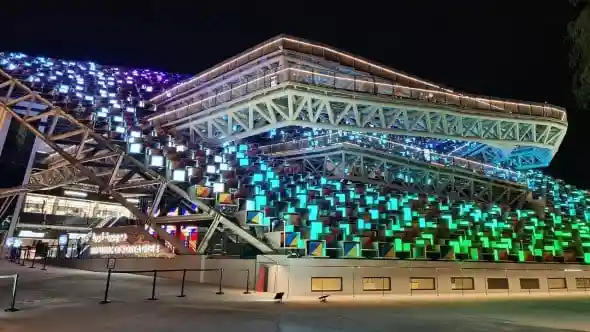
The digital age has expanded the possibilities. 3D printing allows you to create structures such as Bloom Pavilion (USA, 2016), a maze of biodegradable plastic filaments. Augmented reality, used in the South Korean Pavilion at Expo 2020 Dubai, superimposed virtual landscapes onto physical walls. Even artificial intelligence is integrated: in 2023, the studio Zaha Hadid Architects designed a generative pavilion whose shapes adapted in real time to the movements of visitors.
Sustainability: When the temporary leaves a legacy
Although ephemeral, this architecture prioritizes environmental responsibility. German Pavilion at Expo 2015 Milan used photovoltaic membranes that were then reinstalled in schools. At festivals such as Coachella, facilities such as Spectra (2018), a tower of steel and colored glass, was dismantled to reuse the 90% of its materials. Initiatives such as “Design for Disassembly” (Design for disassembly) promote circular life cycles, where each component has a second chance.
Beyond the fleeting
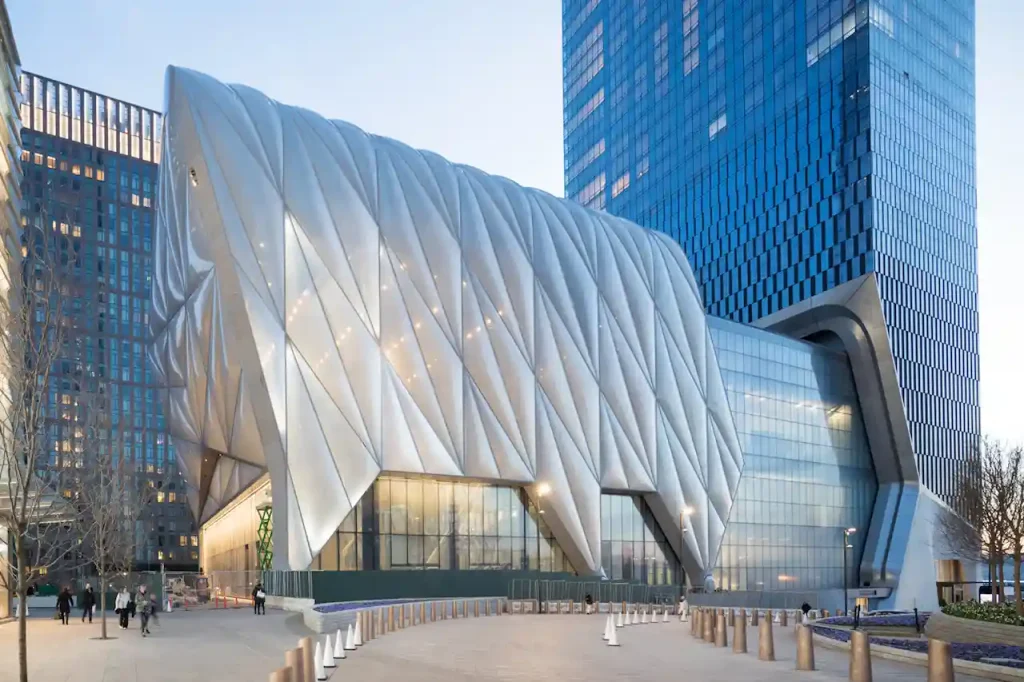
The biggest challenge is balancing impact and pragmatism. Projects like “The Shed” in New York—a cultural center with a mobile structure that expands as needed—shows how the ephemeral can become flexible. However, obstacles remain: high costs, urban regulations, and the pressure to create “Instagrammable moments” that prioritize aesthetics over function. The future points to smart materials—such as textiles that absorb CO₂—and participatory design, where the public intervenes in the creation.
The ephemeral as a reflection of our times
Ephemeral architecture mirrors societies eager for intense experiences yet conscious of their impact. In a world where the permanent often becomes obsolete, these designs remind us that sometimes what lasts the longest is what isn't meant to last.

1 Comment
elevator installation companies · at
I find the idea of designing with dismantling in mind from the outset particularly interesting. In temporary structures, sustainability shouldn't depend solely on using specific materials, but also on anticipating what will happen to each element once its initial function is complete. Designing components that can be disassembled, moved, and reused in other projects allows a temporary installation to have a much longer lifespan than it might seem.